The knee is one of the most powerful and complex joints in the body, responsible for supporting your weight, absorbing impact, and allowing you to move with strength and stability. Every time you walk, squat, climb stairs, or play sports, your knee relies on a coordinated network of muscles, ligaments, and cartilage.
At Southeast Orthopedic Specialists, we see firsthand how understanding this anatomy helps patients recognize early signs of injury and seek care before symptoms worsen.
The Key Structures of the Knee Joint
The knee is a hinge joint formed where the femur (thigh bone), tibia (shin bone), and patella (kneecap) meet. While the bones provide the framework, the surrounding soft tissues make movement possible and protect the joint from excessive stress.
Muscles: Powering and Supporting Knee Motion
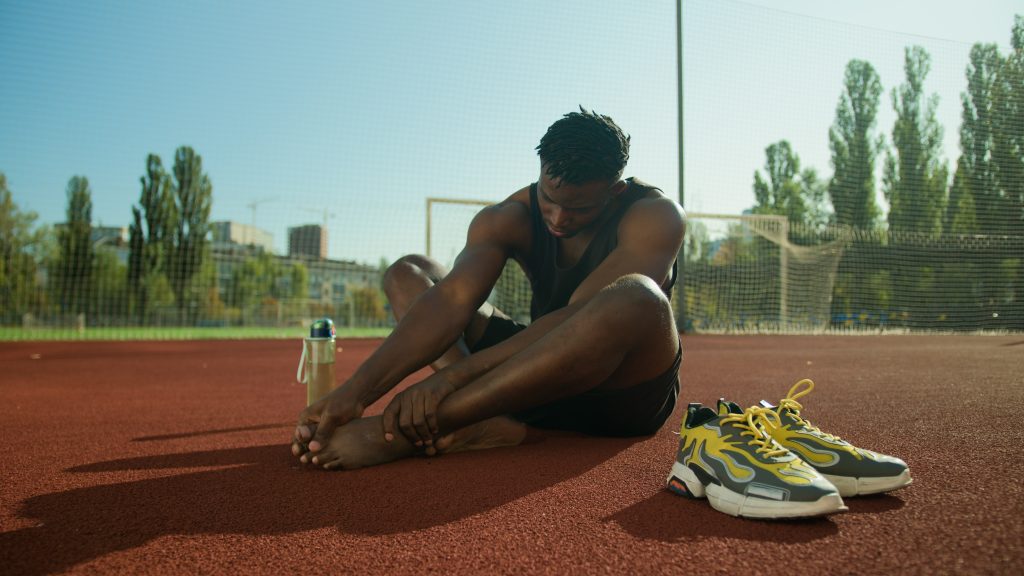
If you suspect turf toe, look for these signs:
The muscles around the knee play a major role in mobility and alignment. The quadriceps at the front of the thigh help straighten the knee and guide the kneecap, while the hamstrings at the back assist with bending the knee and controlling deceleration during movement. The calf muscles, particularly the gastrocnemius, help with both knee flexion and stability. Even muscles that sit above the knee, the glutes and hip stabilizers, have an enormous influence on knee alignment. Weakness in the hips often causes the knee to collapse inward, creating excess strain on the joint.
Ligaments: Providing Stability and Control
The knee’s ligaments serve as strong stabilizers that prevent excessive movement.
- ACL (Anterior Cruciate Ligament): Controls rotational stability and prevents the tibia from sliding forward.
- PCL (Posterior Cruciate Ligament): Prevents the tibia from sliding backward, often injured in high-impact trauma.
- MCL (Medial Collateral Ligament): Protects the inner knee from inward forces.
- LCL (Lateral Collateral Ligament): Supports the outer knee and prevents outward bending.
When any of these ligaments are sprained or torn, patients frequently notice instability, pain, or difficulty pivoting or bearing weight.
Your Turf Toe Treatment Plan
The vast majority of turf toe injuries can be treated by our expert team without surgery:
- Rest and skipping high-impact activities are recommended first
- Ice therapy and elevation help bring down swelling
- Specialized taping, bracing, or stiff-soled shoes limit harmful motion
- Over-the-counter medication (like ibuprofen) reduces inflammation
- Our in-house physical therapy program supports flexibility and joint recovery
If the injury is severe, a walking boot, cast, or surgical repair may be considered, but less than 2% of turf toe injuries at Southeast Orthopedic Specialists require surgery.
Cartilage: Protecting the Joint and Absorbing Shock
Cartilage is another crucial component of knee function. The smooth articular cartilage covering the ends of the bones allows them to glide without friction, absorbing shock during impact-heavy activities like running or jumping. Deeper within the joint, the medial and lateral meniscus act as C-shaped shock absorbers that cushion the knee and help distribute weight evenly. Because these structures endure significant pressure and twisting forces, meniscus tears and cartilage damage are among the most common causes of knee pain.
How These Structures Work Together
For the knee to work efficiently:
- Muscles create movement and alignment
- Ligaments maintain stability
- Cartilage cushions impact and prevents friction
When muscles, ligaments, and cartilage all function properly, the knee moves fluidly and maintains strength during even the most demanding activities. But when one structure becomes strained, weakened, or injured, the entire system is affected. Pain, swelling, stiffness, catching, or instability often follow. That’s why understanding knee anatomy is so important as it empowers patients to identify symptoms early and get the right treatment before the injury progresses.
“At Southeast Orthopedic Specialists, we emphasize the importance of understanding how the knee works because it helps patients recognize issues sooner and take control of their joint health. When we identify the exact structure causing pain, whether it’s a ligament, muscle, or cartilage, we can tailor a treatment plan that restores long-term stability and function. Early evaluation often leads to better outcomes and fewer long-term complications.”
– Dr. Colin Murphy, Sports Medicine Specialist at Southeast Orthopedic Specialists
Why Knee Anatomy Matters for Your Health
At Southeast Orthopedic Specialists, our team uses advanced imaging, detailed physical exams, and personalized treatment planning to identify the exact source of knee pain and restore optimal function. Whether you’re dealing with a sports injury, chronic knee discomfort, or sudden instability, we’re here to help you get back to moving comfortably and confidently.

 JACKSONVILLE, FL (June 19, 2024) – Not too many doctors can say they have invented something to help their patients. However,